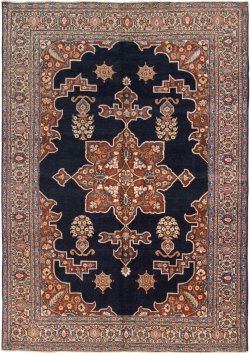
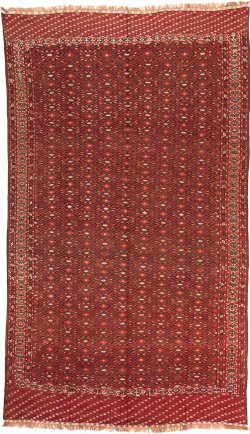
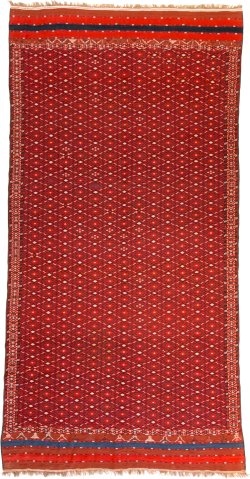
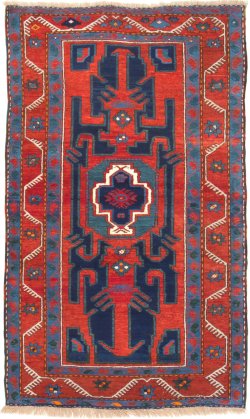
Triclinium Bidjar rug

REF.: R20590
Triclinium Bidjar rug
| Price range: | More than €25.000,00 |
| Description: | Triclinium Bidjar rug |
| Dimensions: | L553xB387 |
| Origin: | province of Azerbaijan |
| Period: | 1880-1940 |
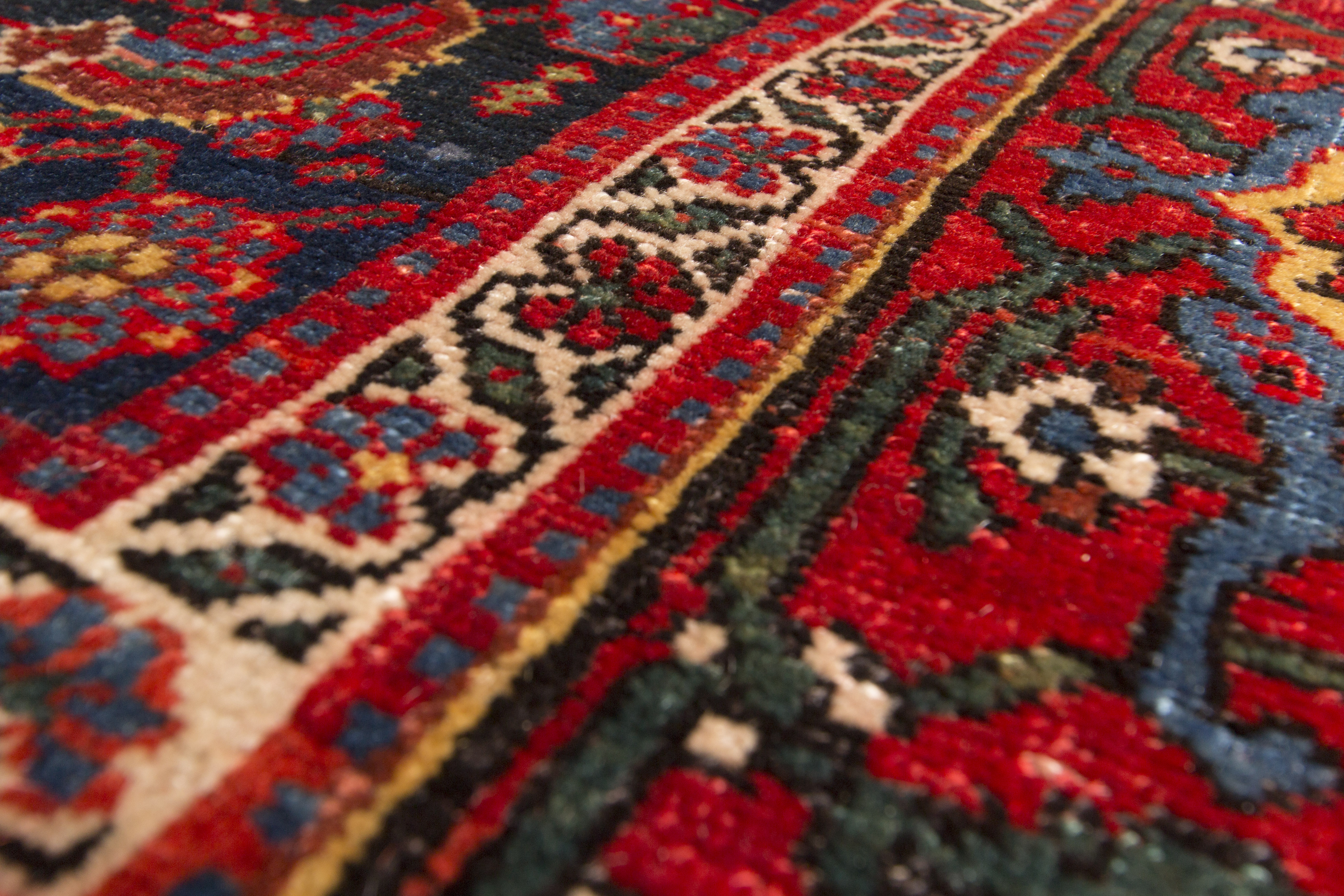
| Medium: | pile: wool / warp and weft: wool |
| Technique: | Hand knotted |
Coulours may appear different on the website than in reality. All mentioned prices and sizes are indicative and not binding. Possibly some rugs that are still online, are not available anymore in the showroom.
Bidjar is a small town in the heart of Iranian Kurdistan, just over 200 km from Hamadan. The production extends to several villages in the surrounding area, which are seldom accurately named.
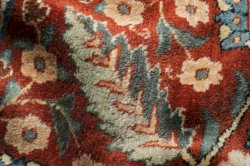
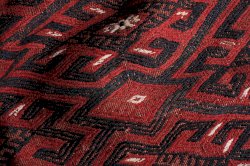
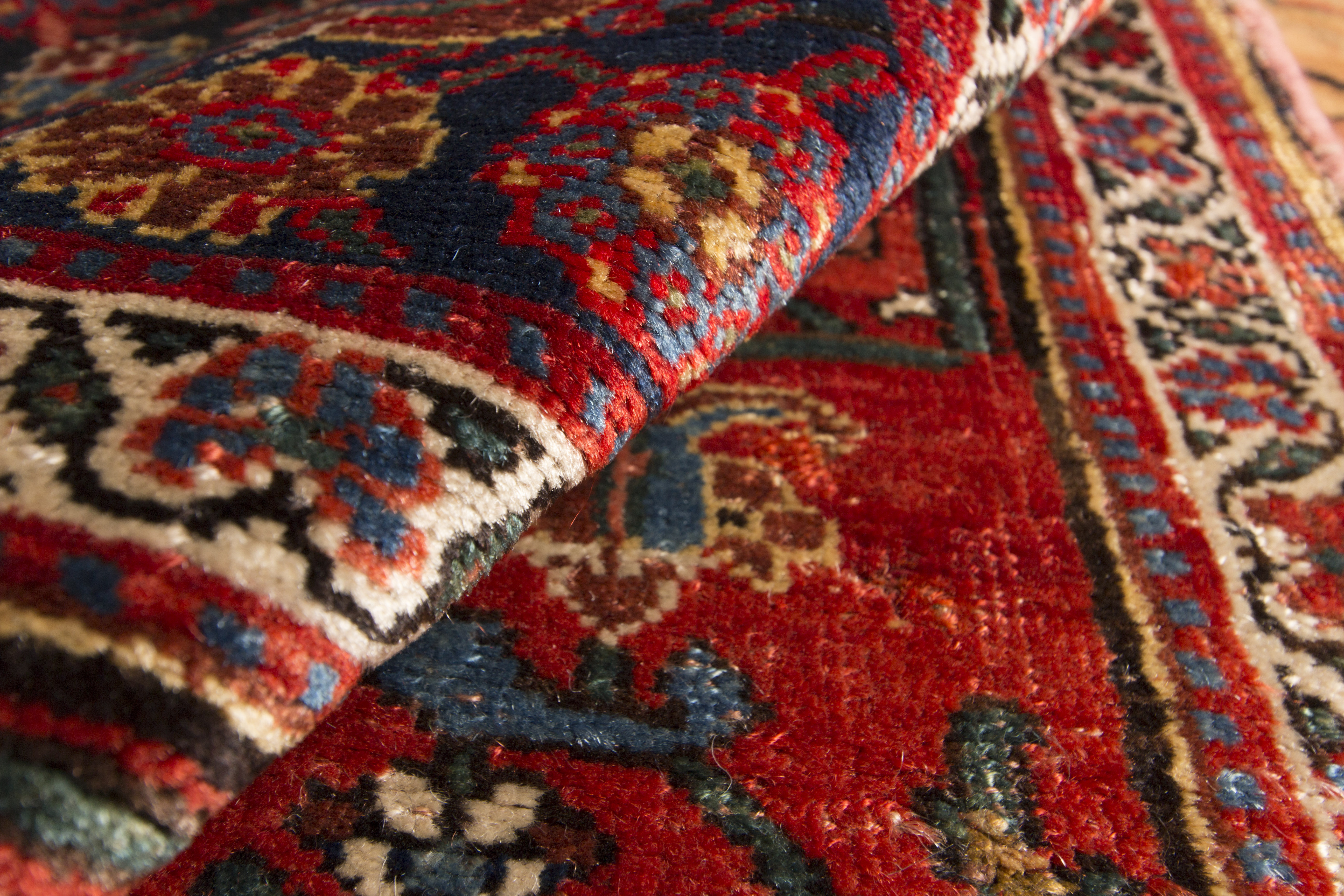
Although carpets knotted on a woollen weft appear supple, Bidjar carpets are particularly rigid in structure. This structure is due to the work of the weaver who, after each row of knots, applies a long blow with a heavy metal comb to the row he has just completed.
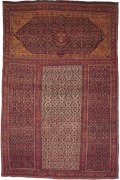
One of the most amazing designs produced in the Bidjar region is undoubtedly the "Triclinium", which shows four carpets in a single piece: the kelleghi, the mian farsh and two kénaré (these terms refer respectively to a wide corridor, a main carpet and two narrow corridors). This was generally the standard layout for formal meetings. The Triclinium (an unfortunate transposition of an ancient term for a seat surrounding the three sides of a table) refers to that set-up of three tables.
Bidjar is a small city in the heart of the Persian province of Kurdistan at about 200 km from Hamadan. The carpet production extends towards neighboring villages. Even though one of the features of knotting on a woolen warp is the fluffy feeling, these Bidjars are heavy and hardwearing. This is because while knotting these carpets, the weavers constantly beat the row of knots with a heavy metal comb.